

The ITC Faculty is proud to announce the official launch of ECO-MOSAIC: Ecosystem Monitoring and Scaling for Climate Change Impacts.
This two-year project, funded by the European Space Agency (ESA) under the CLIMATE-SPACE initiative, aims to revolutionize how we monitor biodiversity and assess the impacts of climate change on terrestrial ecosystems. The official kick-off meeting took place on 9 October 2025.

Why ECO-MOSAIC?
Climate change is reshaping ecosystems at an unprecedented pace, altering species distributions and threatening biodiversity across Europe. While previous projects have focused on ecosystem structure and function, ECO-MOSAIC breaks new ground by targeting species-level responses at large scales.
“What makes ECO-MOSAIC unique is its focus on species-level responses at continental scales,” says Dr. Elnaz Neinavaz, Science Lead and Project Coordinator. “By integrating Earth Observation (EO) data with ecological models, we can move beyond ecosystem structure and start predicting how species will respond to climate change extreme events.”
The project will integrate EO data, Essential Climate Variables (ECVs), and Essential Biodiversity Variables (EBVs) with advanced ecological modelling to predict and monitor shifts in species distributions.
A strong European Consortium
Led by ITC, the project brings together a highly skilled consortium:
WirelessInfo from the Czech Republic brings expertise in geospatial data integration and citizen science. The Norwegian University of Science and Technology (NTNU) collaborates in ecological modelling and biodiversity forecasting. SINTEF (Norway) provides knowledge in smart data management and digital twin technologies.
An international Advisory Board, including experts from the Senckenberg Society for Nature Research and the Naturalis Biodiversity Center, will ensure scientific excellence and policy relevance.
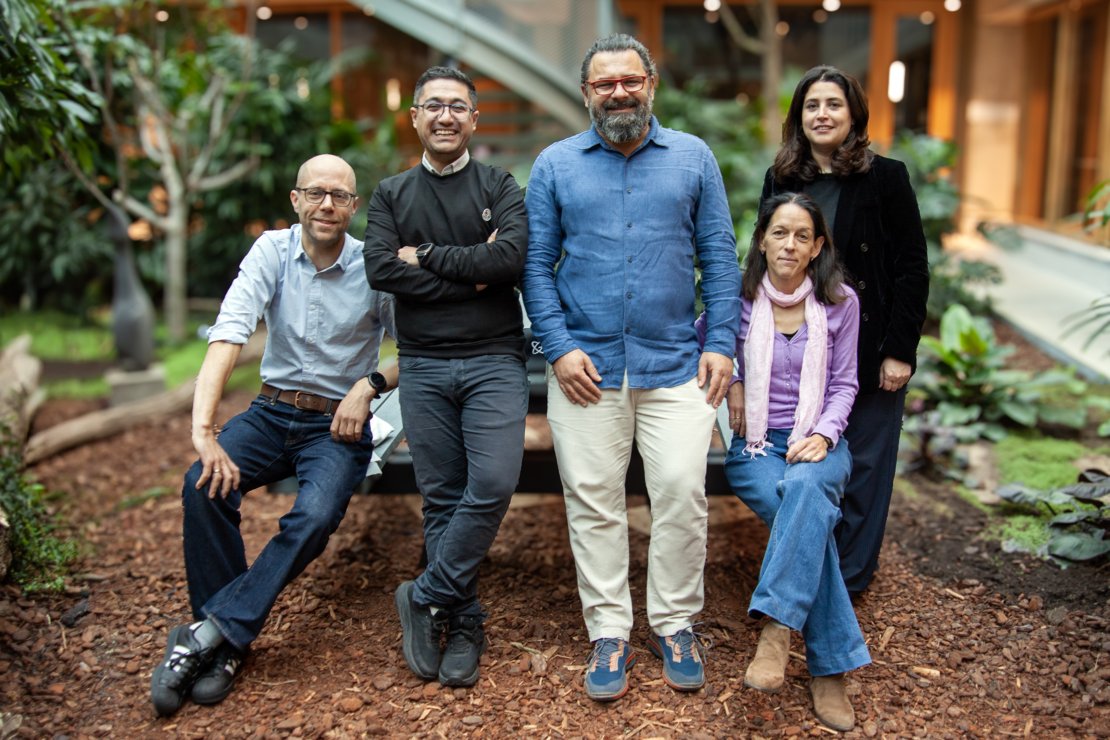
Group of ITC members involved in ECO-MOSAIC
Tracking forest transitions across Europe
One of ECO-MOSAIC’s flagship case studies, led by ITC, focuses on transitional forest ecosystems. These landscapes are undergoing rapid change due to climate-driven disturbances such as droughts, bark beetle outbreaks, and wildfires. These events often lead to severe deforestation, but they can also create opportunities for new species assemblages and increased biodiversity.
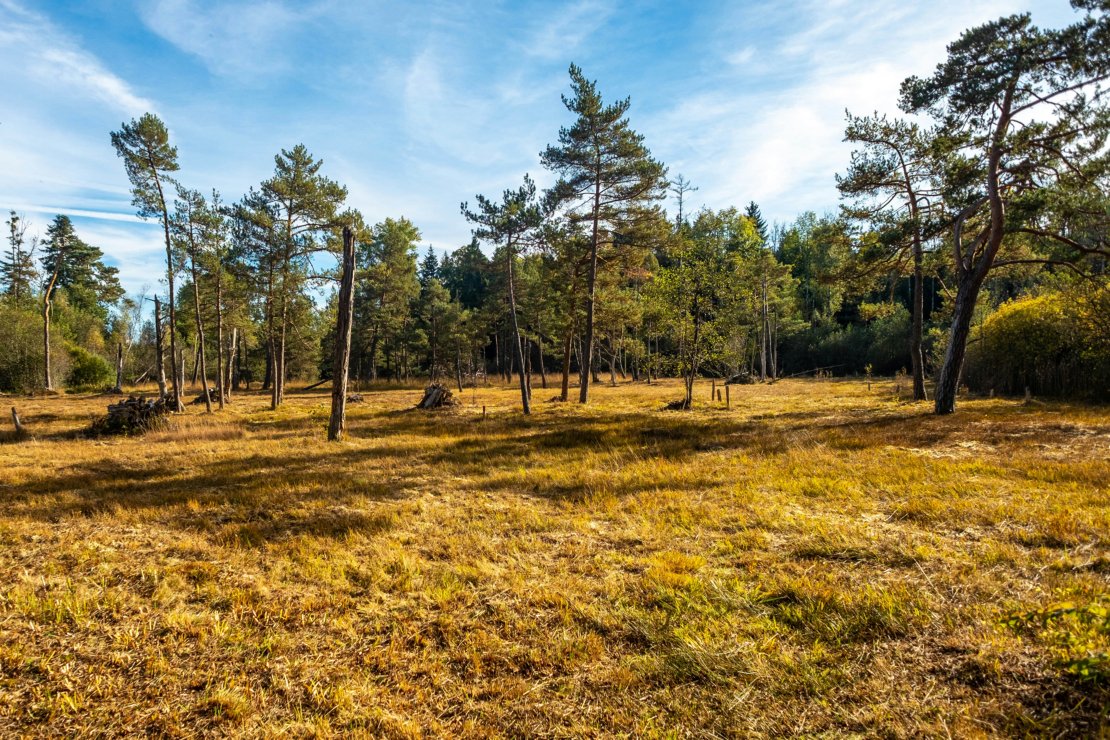
Dry forest by Christian Thöni (Unsplash)
The study will integrate historical satellite archives, modern EO missions, and advanced ecological modelling to understand how key species like Norway spruce, Scots pine, and European beech respond to these pressures. By combining remote sensing with ground observations and citizen science data, the team aims to identify early-warning indicators of ecosystem shifts and provide actionable insights for adaptive forest management.
“Forests are dynamic systems, and climate change is accelerating their transformation,” explains Dr. Panagiotis Nyktas, contributor to ECO-MOSAIC and Assistant Professor at ITC. “Our goal is to understand these transitions at a biome-wide scale and provide knowledge that helps managers and policymakers anticipate and adapt to these changes.”
Three case studies across Europe
In addition to ITC’s work on transitional forests, ECO-MOSAIC will deliver two further case studies: a case modelling range shifts in Mediterranean pine forests and boreal taiga, and a case using EO data to predict biodiversity changes in Norway, encompassing thousands of species from plants to mammals.
The project will also deliver a five-year scientific roadmap to guide future research and policy actions.
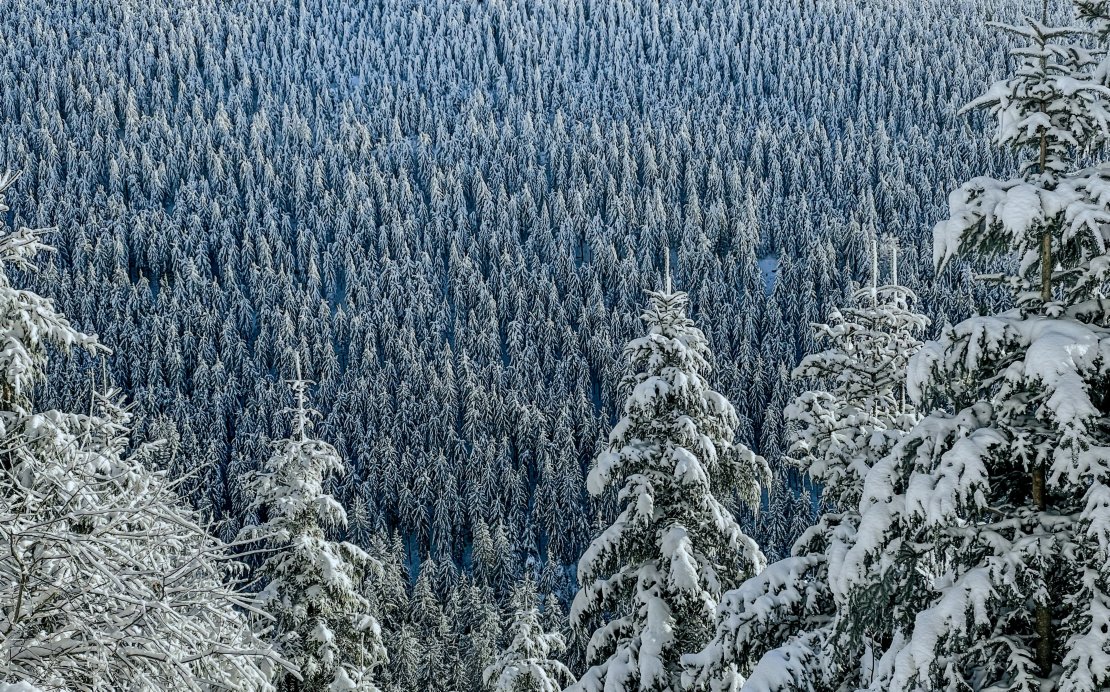
Boreal taiga by Bernd Dittrich (Unsplash)
More information
The ITC team for the ECO-MOSAIC project includes six key members, each bringing complementary expertise:
Dr. Elnaz Neinavaz serves as Project coordinator, the Science Lead and leads WP1 and WP5, focusing on integrating EO data with biodiversity indicators.
Dr. Haidi Abdullah is the Project Manager and WP3 Lead, specializing in forest disturbance analysis and biodiversity monitoring.
Dr. Margarita Huesca Martinez acts as Co-Project Investigator, contributing her experience in remote sensing and ecological modelling.
Dr. Panagiotis Nyktas serves as case studies lead and contributes to the scientific analysis, leveraging his background in landscape ecology and UAV-based vegetation mapping.
Dr. Roshanak Darvishzadeh and Dr. Thomas Groen provide expertise in biodiversity monitoring from space.
To receive more information about the project, please contact Dr. Elnaz Neinavaz and Dr. Haidi Abdullah. To remain updated, visit ITC’s Natural Resources Department page or LinkedIn page.
More recent news
 Wed 25 Mar 20264TU.Health Event 2026 sets course for collaborative healthcare innovation
 Tue 17 Mar 2026Rising temperatures can delay the arrival of spring
 Thu 5 Mar 2026Tom Loran says goodbye to ITC
 Thu 19 Feb 2026Project SEEN‑ATLAS Receives European Funding
 Wed 18 Feb 2026Master's in Geo-information Science and Earth Observation recognised as an initial Master's