Home ITCUT FieldLab is nearly complete: what can you expect?

UT FieldLab is nearly complete: what can you expect? A conversation with the three initiators from ITC and ET

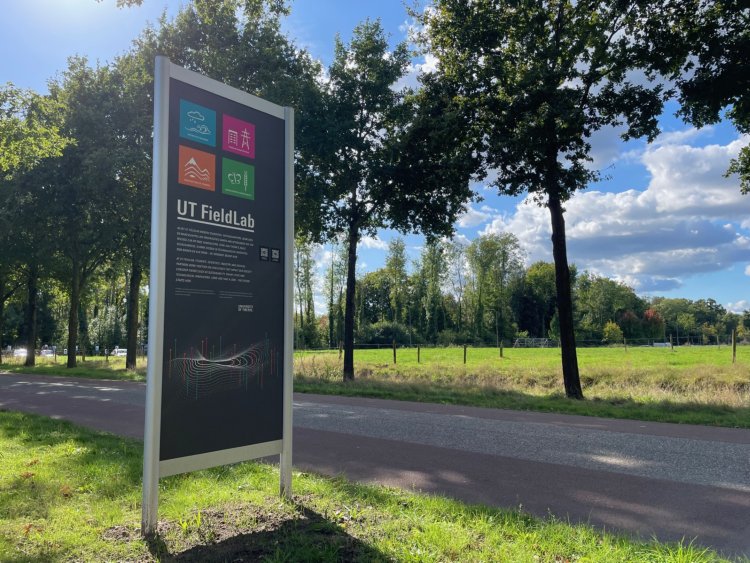
On Thursday 2 October 2025, the University of Twente will officially open its new UT FieldLab on campus. This ‘open-air laboratory’ is a space where researchers, students, and societal partners collaborate on experiments addressing themes such as climate adaptation, sustainable technology, landscape design, and citizen science. The UT FieldLab connects academic research with practical application and the public good.

The FieldLab serves as a bridge between science and real-world practice. The site hosts a wide range of experiments conducted by faculties such as ITC and ET, as well as the Climate Centre. External organisations—including utility companies, the Royal Netherlands Meteorological Institute (KNMI), and even the Royal Dutch Skating Association—are also carrying out trials here. And this is just the beginning: more initiatives are expected to join in the future.

We spoke with the three initiators of the FieldLab and asked them what we can expect from this remarkable new space.

Mark, how did the idea for the FieldLab come about? And why are researchers, students, and societal partners so enthusiastic about it?
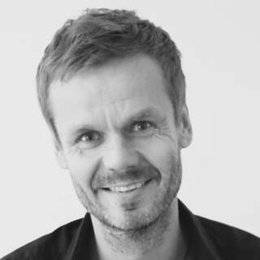
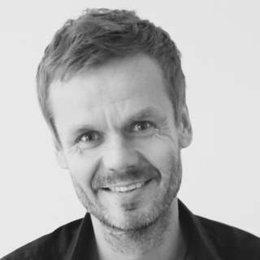
Mark van der Meijde

The idea for a FieldLab has actually been around for quite some time. We’ve spent at least ten years discussing how to strike a balance between conducting measurements in a controlled laboratory environment and engaging with the complexity of the real world. Especially for training purposes, instrument calibration, and testing new techniques, we were looking for something that didn’t yet exist in the Netherlands.
When the opportunity arose to secure some funding and the Executive Board offered us a site, things quickly gained momentum. Within just a few years, the ITC and ET faculties managed to get the project off the ground—though many other faculties have also been involved. More than 50 societal partners contributed to the development of the FieldLab, reflecting a strong demand for a space where people can measure, test, and experiment.

Together with our partners, we also focused on environmentally friendly construction. Much of the material used was repurposed in a circular way, and a large part of the groundwork was carried out by students from a vocational training programme in earthworks. It’s a fantastic collaboration where science, education, and society truly come together.

Mark van der Meijde

Wim, experiments often have a clear beginning and end. Yet many of the trials at the FieldLab are ongoing. How does that work exactly?
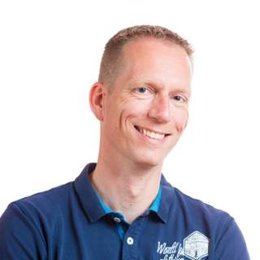
Wim Timmermans

You're quite right—most experiments do have a defined start and finish. But the UT FieldLab, and its various components, is not so much a single experiment as it is an experimental garden where research takes place across multiple disciplines and themes. The facilities have been designed to support a wide range of potential studies. We hope—and expect—that this will remain a valuable resource for many years to come.

Wim Timmermans

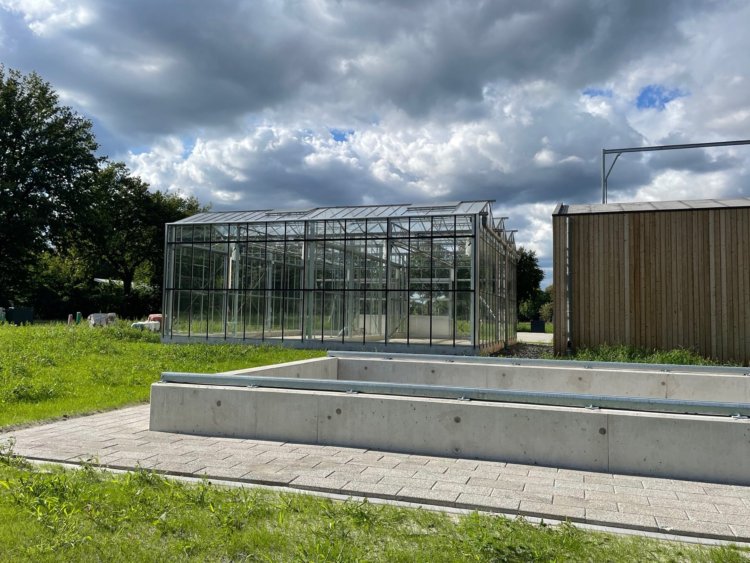
Leon, anyone walking past the FieldLab now mainly sees a large horizontal bar and a big container. What exactly is that, and what will happen there?

Leon olde Scholtenhuis

In the shed, you’ll find the Aeolian Transport experiment, where researchers study how wind and soil moisture affect sand movement. A wind tunnel from the Horst building was adapted and relocated here. Through the large open doors, passersby can watch sand being blown by a wind generator. You’ll also see thermal cameras and computer simulations of this physical process. This is how we develop knowledge in Twente about dune formation and coastal protection. Despite its dynamic appearance, the setup is surprisingly quiet—you’ll hardly hear it as a neighbor or visitor.

The pool is the Water Quality Pond. Here, researchers measure water quality in both still and wave-driven surface water. The sloped basin includes a wave generator, and cameras monitor the biological and chemical processes taking place. Thanks to a connection with the UT ponds, little fresh water is needed. It’s a unique outdoor setup that allows for water research under realistic weather conditions.

Leon olde Scholtenhuis

Mark, suppose you’re walking or cycling past the FieldLab—can you just enter? Are there opening hours? And are there interactive elements for visitors?
Mark van der Meijde

The FieldLab is freely accessible. It opens in the morning and closes in the evening, so you’re welcome to drop by and see what’s happening and which tests are being run that week. Many experiments allow you to actively observe — live data on soil movement and air vibrations, or the latest weather readings, for example. You can also learn about geology and soil composition, take a close look at how green roofs and walls function, or see how vegetation responds to different conditions. QR codes at each experiment provide more information and, in some cases, allow you to follow the experiment in real time. It’s an interactive experience that’s highly accessible to everyone.

Mark van der Meijde

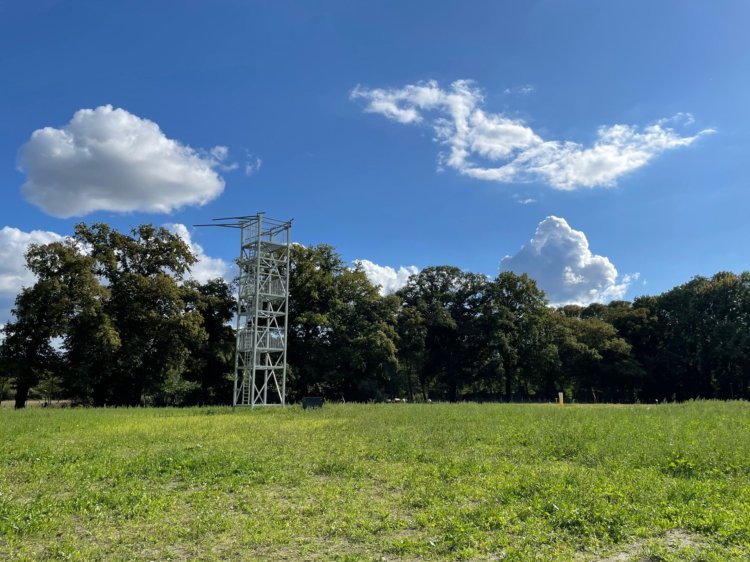
Wim, you’re also involved in other ‘towers’, such as the one on the former DISH/ITC hotel. What makes this climate tower different from the others?
Wim Timmermans

The key difference is that researchers and students can climb this tower to carry out measurements without compromising their safety. Our other towers ‘in the wild’ require climbing courses before they can be accessed safely, which is a significant barrier when trying to educate students in this field. Another important distinction is that this tower allows us to easily test equipment and compare different sensors in real-life conditions over extended periods, without disrupting our permanent measurement setups elsewhere. This is essential before deploying sensors in our global monitoring stations.

Wim Timmermans

Leon, what role will the FieldLab play for UT students? Will they actively conduct experiments here? And what about partners like utility companies—how will they use the FieldLab?

Leon olde Scholtenhuis

Great question! Students will definitely play a role. In fact, the first students have already carried out measurements at the Utility Mapping Site—the cable and pipeline trench—at the back of the site. Several times a year, we’ll build experimental setups, observation stations, and test environments for educational purposes, involving multiple faculties and programmes. UT graduates can also place test setups at our Dynamic Test Site. One graduate, for example, wants to test the heat-reducing effects of an innovative paving material. Utility companies will also conduct experiments here through UT programmes such as ZoARG. Our ambition is to co-develop and test new scanning technologies for cables and pipelines. This means joint testing and training for professionals—a great example of lifelong learning. Did you know that part of the FieldLab was built through collaboration with teachers and students from the vocational programme in Machine Operation at the SOMA College? This stems from a learning pathway developed by Civil Engineering in partnership with vocational and higher education institutions.

Leon olde Scholtenhuis

Finally, to all three of you: which experiment are you most looking forward to? Are there trials where the outcome is still completely unpredictable?

Mark van der Meijde

Every experiment brings something valuable, and depending on the day or season, one might be more exciting to follow than another. If there’s an earthquake or volcanic eruption, that’s incredibly fascinating to monitor. But when we’re working in the wind tunnel or the water basin to explore how we can protect the Netherlands—and many other places around the world—from water and wind, I’ll definitely be there to observe. And it’s always captivating to see how people use specialised equipment to peer into the ground and make the invisible visible!

Mark van der Meijde
Leon olde Scholtenhuis

Everyone has their own favourite, but what I find most rewarding is how we’ve strengthened new collaborations between research groups across two faculties. Regional partners are highly engaged, and we’re able to make a real impact on major societal challenges. Who knows—perhaps in a few years we’ll be able to say that new natural ice skating routes in Twente were made possible here. And that nearly all major construction companies in the Netherlands learned how to scan cables and infrastructure using the latest technologies right here in Twente.

Leon olde Scholtenhuis
Wim Timmermans

Of course, we're not going to play favorites or leave anyone out! What stood out most was witnessing new collaborations take shape—not necessarily between faculties, but between individuals from diverse disciplines coming together to co-design an experimental garden. This beautifully reflects the transdisciplinary approach that is essential for addressing today’s complex societal challenges. I must admit, I’m quite fascinated by the wind tunnel; it opens up exciting possibilities for exploring turbulence using remote sensing imagery. And then casually snatch up the Millennium Prize for turbulent flows along the way...

Wim Timmermans

More information

The UT FieldLab officially opens on Thursday 2 October 2025. Go to utwente.nl//en/utfieldlab for more information.

R. Kwakman MSc (Robin)
Communication Advisor | Internal and external communication | Corporate communication | Editor UT Stories