

As every year, UT awarded graduation awards to one master’s student from each faculty. Opening Academic Year. The graduation award consists of a certificate and a cheque for €1000 for the best master's thesis of the past year.
Faculty of BMS – Jara Martens
For her master thesis, Jara investigated the effectiveness of Clair, an AI-powered conversational agent, in facilitating productive discussions during collaborative learning tasks. Clair uses the Academically Productive Talk (APT) framework, which includes specific "talk moves" designed to encourage students to share their thoughts, listen to each other, deepen their reasoning, and engage with others’ ideas.
This research identified that Clair has the potential to support educators by improving the quality of collaborative discussions by guiding students. Future research should investigate how Clair can be implemented in real classrooms over time and assess its impact on students' learning outcomes
Faculty of EEMCS – Sjoerd van den Belt
Sjoerd van den Belt studied how machine learning can be used to localise DNA mutations that proved advantageous in evolution. These mutation are important for understanding viruses and diseases and to develop new drugs. Traditional methods are fast, but often miss the mark when the data becomes more complex. Smart neural networks can do this much more accurately, but this normally takes a lot of computing time and expensive hardware.
That is why Van den Belt developed the FAST-NN and FASTER-NN models. These use more efficient computations, allowing them to recognise DNA patterns faster and more accurately than previous methods, even without ultra-fast computers. His improved model can scan entire genomes at lightning speed while analysing multiple biological processes, such as mutations and recombination sites. In doing so, he makes machine learning much more accessible for biological research and healthcare applications.
Faculty of ET – Amy ten Berge
Amy ten Berge studied the impact of climate change on streamflow in the Lesse river in Belgium. Climate change increases the likelihood of extremely high and low water levels, which can cause problems. The models used for this purpose are calibrated based on the past. The question is whether the models are still correct in the future. Amy tested the robustness of two commonly used hydrological models (HBV and GR6J) by calibrating them not only in the conventional way, but also specifically looking at historic periods with climate conditions similar to the future according to KNMI climate scenarios.
The outcome: the models perform slightly worse under future conditions, but are still sufficiently reliable. Yet, the results turned out to depend on how and to what time period the models were calibrated. For the Lesse, predictions indicated higher peak discharges and lower low flows in 2100. The research showed that predictions with models calibrated on years with future climatic conditions are more reliable. There are many uncertainties, but improving models can help to be better prepared for the impacts of climate change.
Faculty of ITC – Snigdha Dev Roy
By 2050, nearly 70% of the world's population will live in cities. This rapid growth is causing cities to become increasingly warmer than their surroundings. This is due to the way buildings are designed and constructed, as well as the materials used. Master's student Snigdha Roy Dev therefore investigated the relationship between the shape and structure of cities and the temperature of the land surface in Paris, Rotterdam, Milan, and Vienna. To do so, she used high-resolution satellite data from NASA, mapping heat spots (hotspots) and cooler areas (coldspots).
The study showed that industrial areas are often the hottest spots, while quiet residential areas tend to remain cooler. With a model, Snigdha Dev Roy managed to explain more than 80% of the temperature differences in cities. Important factors are height, shape, orientation and distance between buildings. Interestingly, the effects differ from city to city: in Paris, for example, higher buildings have a different impact than in the other cities. These insights can help cities design neighbourhoods that are more resistant to heat waves and more pleasant to live in.
Faculty of S&T – Jana Hecking
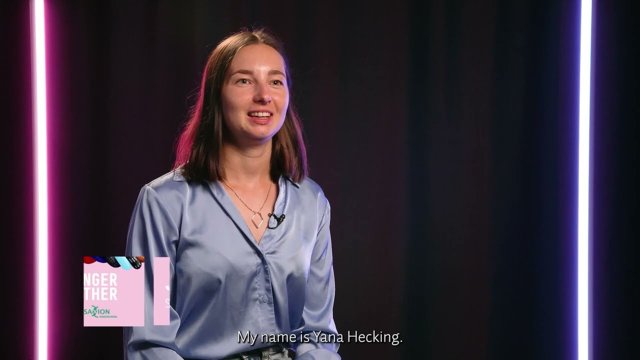
Master's student Yana Hecking worked on a new type of 3D mini heart that would enable researchers to more accurately mimic the functioning of the human heart in the lab. Existing models can already pump and contract, but lack an important layer: the epicardium, the outer shell of the heart that plays a major role in repair and development. By incorporating this epicardium into the so-called Mini-Mini Heart (MMH), the model becomes significantly more realistic and useful for research.
In her research, Yana Hecking developed a method to grow this epicardium along with the mini-heart. The tiny hearts were found to beat properly and even responded to electrical stimuli, just like a real heart. A method of controlled damage was also tested to study the epicardium's response. This could soon help test new drugs and treatments and improve our understanding of heart disease.
More recent news
 Wed 25 Mar 20264TU.Health Event 2026 sets course for collaborative healthcare innovation4TU4TU.HealthCollaborationConferences & SymposiaResearch & InnovationTECHMED CENTRE
 Tue 17 Mar 2026Rising temperatures can delay the arrival of springclimateitcPhD defenceResearch
 Thu 5 Mar 2026Tom Loran says goodbye to ITC
 Thu 19 Feb 2026Project SEEN‑ATLAS Receives European Funding
 Wed 18 Feb 2026Master's in Geo-information Science and Earth Observation recognised as an initial Master'sitc