Home ITCEducationStudyfinderGeo-information Science and Earth Observation
Annabel Jeuring

Master Geo-information Science and Earth Observation

Gain in-depth expertise in the technology behind Earth Observation and GIS to solve global challenges.

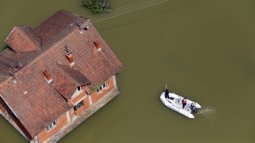
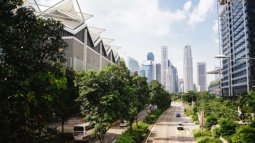
How do we monitor climate change from space? How can Geo-AI predict water shortages or map disaster-stricken areas in real-time? We live in a digital society where Geo-AI and Earth Observation are vital for managing a sustainable planet. This is the ‘science of where’: understanding exactly where changes occur, where stakeholders are affected, and where solutions will be most effective. Whether it is creating disaster-resilient solutions, planning smart cities, or monitoring the Earth’s resources, the ability to generate real-time spatial insights is essential for our changing environment. In this Master's, you develop the expertise to engineer the methods that make these insights possible.

Building on the world-leading reputation of the ITC Faculty, you will dive deep into the scientific and technical methods used to capture, process, and visualise spatial data. You will master the full data cycle - from high-end acquisition using satellites, drones, and sensors to the development of advanced algorithms and spatial models. As a student, you learn to transform raw data into the actionable geographic information needed to support sustainable development worldwide.

Why study at the University of Twente?

Study at a world-renowned institute

Studying at ITC means studying at a faculty ranked among the top institutes worldwide for Remote Sensing and Geographic Information Science. ITC is internationally recognised for its research and capacity development in the field of Geo-information Science and Earth Observation.

Access to first-class lab facilities and resources
Work with leading experts in an international community

One of the great benefits of the Master's in Geo-Information Science & Earth Observation is the international community you can become part of. Joining a diverse network of professionals and students from over 170 countries provides you with a unique global perspective on spatial problems. You can work with leading scientists and other experts from the geo-information science and Earth observation domain. It is a great environment where you will expand your network and gain invaluable hands-on experience for your future career.

Challenge-based learning and personal tailoring

We believe in a personalised approach to education. You have the freedom to tailor your study path by choosing from six specialised tracks and various elective courses. This flexibility allows you to apply your technical skills to the real-world challenges you are most passionate about - whether that is climate change monitoring, disaster resilience, or urban innovation.

Choose a specialisation

Career perspectives

Obtaining this Master's degree, you become part of a world-renowned network of geo-information professionals. Our graduates are highly sought after for their ability to bridge the gap between complex spatial technology and real-world decision-making. You will be equipped for a career at the forefront of the geo-information sector, working in roles such as Spatial Data Scientist, Remote Sensing Expert, or GIS Systems Architect.

The global demand for GIS experts is growing rapidly. Our alumni find their way to prestigious international organisations such as the United Nations (UN), the World Bank, and the European Space Agency (ESA). Furthermore, you will be prepared for key roles in national mapping agencies, environmental consultancies, and the private sector, where tech giants and engineering firms rely on spatial data to build a sustainable future. Whether you pursue a career in research, policy-making, or technical development, your expertise will be instrumental in solving the global challenges of tomorrow.

Related stories

Related master’s

Not sure if this Master’s is exactly what you’re looking for? Maybe another related master’s at the University of Twente suits you better:

Which Master's fits you better?

If you’re interested in geospatial science, Faculty ITC offers two strong Master’s programmes: Geo‑information Science & Earth Observation and Spatial Systems & Society. They overlap, but they prepare you for different kinds of careers and ways of working.

Comparison ITC Master's

Quick comparison

These are general tendencies, not strict rules, but they help you see the difference in emphasis.

Geo-information Science and Earth Observation

Spatial Systems & Society

Become a specialist

Work as an integrator

Learn topics step‑by‑step

Learn topics in combination

More individual work

More teamwork

Focus on analysing part of a global challenge

Focus on designing solutions for a global challenge

If you want to specialise in geo‑information

If you want to design solutions with and for society

Geo‑information Science & Earth Observation

Geoinformation Science and Earth Observation is for you if you want to specialise deeply in geo‑information and earth observation. You learn how to collect, process and analyse spatial data, and you apply these skills in a domain you choose, like climate change, urban planning, food and water security, critical raw materials, land scarcity, and natural disasters.

  • Starts broad and skill‑oriented, then becomes more specialised
  • Clear guidance and structured learning, especially at the beginning
  • Strong focus on technical skills and “learning by doing”
  • Ideal if you enjoy working independently

Typical careers: geo‑information specialist, technical consultant, or researcher.

Spatial Systems & Society

Spatial Systems & Society is for you if you want to tackle complex societal problems using spatial data. You learn to look at challenges from multiple angles, technical, social, environmental, and design interventions that are viable in the real world.

  • Strong focus on teamwork and collaboration
  • Emphasis on communication, stakeholder engagement and project management
  • You learn to connect different disciplines and guide solution‑building processes
  • Ideal if you enjoy working with people and leading group efforts

Typical careers: consultant in multidisciplinary teams, project coordinator, or specialist who bridges technical and societal perspectives.

Download brochure

Get digital brochure
[naam],

The brochure is in your inbox!
Hey [naam],

Would you like to receive the brochure of another study programme too?

Brochure sent

We've sent you the brochure. Check your inbox!