

Menu
Global change, driven by growing population densities and rising economic production levels, is increasingly placing pressure on scarce land resources involved in the production of food and other ecosystem products and services.
Adequate solutions to environmental challenges such as biodiversity loss, unsustainable food production systems, deforestation, overgrazing, landscape fragmentation, climate change, and the depletion and contamination of land and water resources require an integration of multiple perspectives and disciplines. Below you can read more about our highlighted themes of expertise and impact: Forestry, Agriculture and Environment.

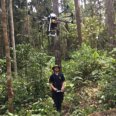
Forestry research at NRS focuses on biodiversity conservation, climate change, carbon cycling, and sustainable management of forest and tree resources.
Our Department's work emphasizes innovative geospatial techniques and data management to support these goals, contributing to broader environmental and land use planning efforts and disaster risk reduction. The department's approach integrates the study of landscape processes with a strong consideration of human roles in the environment, aiming to provide practical solutions for natural resource management.
Related stories
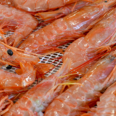
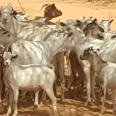
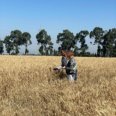
NRS research in Agriculture centres on the sustainable use of land resources, focusing on food security and agricultural resilience in the face of climate change.
By integrating geospatial data with field observations, the Department develops innovative tools for precision farming, crop monitoring, food system resilience, and land use optimization. This research helps in improving agricultural practices, increasing productivity, and ensuring the sustainable management of natural resources, which is essential for supporting rural livelihoods and adapting to changing environmental conditions.
Related stories
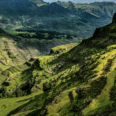
Research in the Environmental field at NRS addresses critical issues related to HEALTHY LANDSCAPES, climate change, and ecosystem services.
The Department focuses on understanding landscape processes, particularly how they affect and are affected by human activities. Through advanced geospatial technologies, the team monitors environmental changes, assesses risks, and develops strategies for sustainable management. This is crucial in supporting livelihoods, resource conservation efforts, and creating actionable insights for policymakers, businesses, and civil society organisations to mitigate environmental challenges.
Related stories
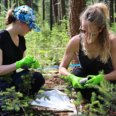


PhD Possibilities
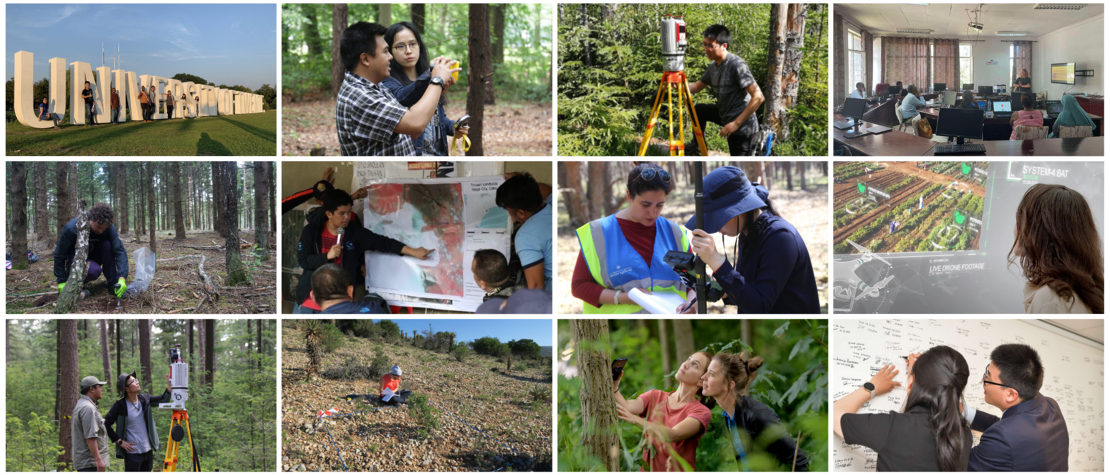
By pursuing a PhD at the Natural Resources Department of ITC you will be able to develop research in a field you love, create societal impact and travel across the world to collect data.
|
Apply for a PhD in 4 steps
1. Self-Assesment Test
Answer to these five questions:
- Do you have a passport or are you eligible to obtain a passport? Yes No
- Have you successfully completed all of the following: Yes No
- five years of tertiary (post-school) education?
- a Master of Science study or equivalent?
- a Master of Science thesis or equivalent based on approx. six months of independent research?
- Do your competencies include all of the following: Yes No
- basics of geo-information science (GIS) and earth observation?
- background and research interest that fit the ITC Research Programme?
- Can you demonstrate your proficiency in English by one of the following:
- you have a recent TOEFL certificate (test of English as a Foreign Language) via the internet (TOEFL-iBT) of at least 90?
- you have a recent IELTS certificate with a score of at least 6.5?
- you have a Cambridge CAE-C (CPE) certificate with a score of at least 90?
- Is the status of your study funding one of the following: Yes No
- fellowship assured from fellowship provider?
- application to fellowship provider submitted or planned?
- partial support assured through a research framework agreement?
If you would answer Yes to these five questions you may pass to the next step.
2. Get in touch with us
We want to get to know you! Contact one of our professors to talk about your research ideas at NRS or your motivation to start a PhD with us. Read their personal page to find out more.

Professor Wieteke Willemen's current research includes RS-based ecosystem service mapping and monitoring for resilient rural landscapes, impact assessments of integrated restoration, citizen science integration in impact research, and prioritization of investments in land degradation neutrality actions.
Professor Andrew Skidmore is a leading expert in spatial environmental resource dynamics, specializing in the use of satellite imagery and remote sensing technology to monitor global biodiversity. He has developed widely used tools for image processing, terrain modeling, and machine learning in the Earth sciences.
Professor Andy Nelson coordinates research, education, and capacity development projects related to food security and the environment. Through projects and mentoring 20 PhD candidates with fellow supervisors, Professor Nelson has helped develop RS-based methods to extract information on food production systems and the environment.
Dr. Roshanak Darvishzadeh's expertise lies in Earth and Planetary Sciences, with a focus on vegetation modeling, canopy investigation, and cartography. Dr. Darvishzadeh has contributed to research on estimating rice crop transplanting and harvest dates using Sentinel-1 data, and analyzing crop productivity under heat stress.
Dr. ir. Anton Vrieling's research and teaching activities concentrate on the application of satellite image time series for the understanding, mapping, and monitoring of dynamic natural resources.
3. Graduate Programme Registration Form
Fill in the form and register your request for the idea you discussed with us in Step 1.
*IMPORTANT: Don't forget to select our research theme (FORAGES) while filling out the application.
4. Post-application Process.
What happens after applying for registration in the Graduate Programme depends upon your registration request in your application.
- Acceptance of your research topic by research theme leader
- Confirmation of your eligibility for promotion (award of PhD degree) by University of Twente
- Dispatch your letter of conditional admission (to support your funding applications)
Subject to your confirmation (official letter) of funding ... - Registration in UT HR System
- Application for your entry visa by the International Service Team of the University of Twente, via the Visacare system.
- Arrange your health insurance (AON) (instructions via the International Service Team and Visacare system)
- Arrange travel date and reception
- Accommodation is reserved in the ITC international hotel (IIH) for all enrolled PhD students. As ITC finds it important to help PhD students adjust and build up a social network. Housing rates are published on the ITC website. A 6 months notice is applicable as PhD students choose to opt for their own accommodation.
More information
- Information about PhDs at ITC
- Current PhD vacancies at ITC
- Fellowship providers
- Facilities and equipment at ITC
- PhD Projects Repository
Phd stories



Academic output
Contact
For research inquiries, please contact Wieteke Willemen