
| Timeline | From September 2024 to 28 February 2027 |
|---|---|
| Theme | Disaster resilience |
| Project type | Other |
| Countries | Italy, Japan, Netherlands |
| Funded by | Horizon Europe |
| More info | https://www.itc.nl/about-itc/scientific-departments/urban-regional-planning-geo-information-management/projects/ |
The 2021 European floods, which claimed the lives of 243 people, served as a significant indicator of the far-reaching impact of climate change. These floods caused catastrophic damage to some of the most technologically advanced countries in the region. They also highlighted a notable fact: despite the extensive advancement of disaster maps and preparedness measures throughout Europe, the lack of individual preventive behaviour had a significant impact. In response to this issue, the MSCA-funded MEDiME project aims to mitigate the disadvantages posed by this lack. It seeks to achieve this by developing a crucial theoretical framework to motivate and engage residents in disaster training and preparedness. Additionally, the project focuses on continuously improving the effectiveness of such training.
Objective
"We should not be seeing this number of people dying in 2021 from floods. It just should not be happening." Hydrologist H. Cloke’s words echoed the widespread shock following the death of 243 people in some of the wealthiest and most technologically advanced countries in the world during the European 2021 floods. Extreme weather events such as floods and heat waves are expected to increase in frequency and intensity in the future (IPCC). As communities grow more exposed to hazard risks, in addition to state preparedness and urban resilience, it is urgent to address public involvement in disaster preparedness (DP) measures to promote individual preventive behaviour (SFDRR 2015-2030). Despite EU advances in Disaster Maps (DM) tools and disaster management procedures of community professionalisation, DM are used mostly by expert stakeholders but are seldom user-friendly for citizens, and current DP initiatives suffer from limited public motivation and engagement. People do not exist in a vacuum, and social and cultural dynamics play a crucial role in defining risk and motivation to engage in DP. Thus, DP strategies should include a systematic assessment of the impact of socio-cultural and spatial factors on people’s motivation and engagement in DP to inform better disaster training. The Motivation and Engagement in Disaster Mapping in Europe (MEDiME) project proposes a theoretical framework of motivation and engagement and a new disaster training based on interactive HM to investigate motivation and engagement in DP and the use of DM for foreign residents. An original socio-cultural and spatial model to understand people’s motivation to participate in DP initiatives based on the Japanese DP research and measures will be implemented, for Japan has always been at the forefront of DP for high levels of community engagement and mainstreamed DM. Project results will increase the impact of EU DP strategies, and inform useful DM uses for the broader public."
For more details, see: Motivation and Engagement in Disaster Mapping in Europe | MEDiME | Projekt | Fact Sheet | HORIZON | CORDIS | European Commission
Activities
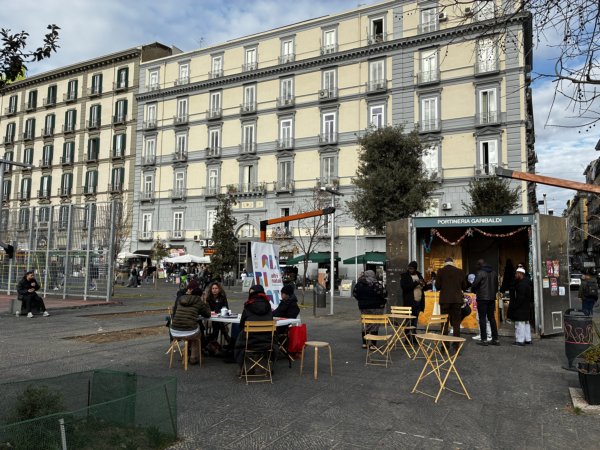
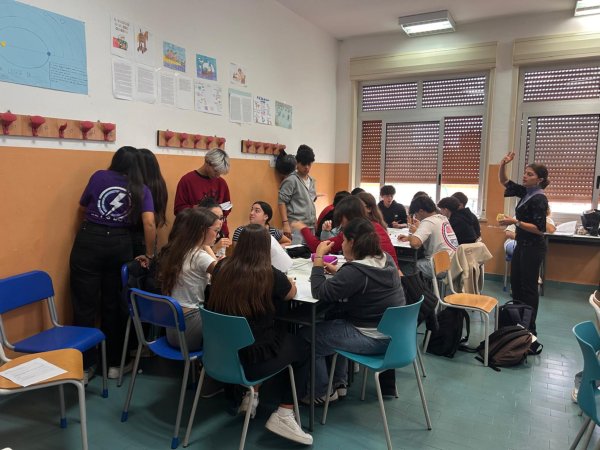
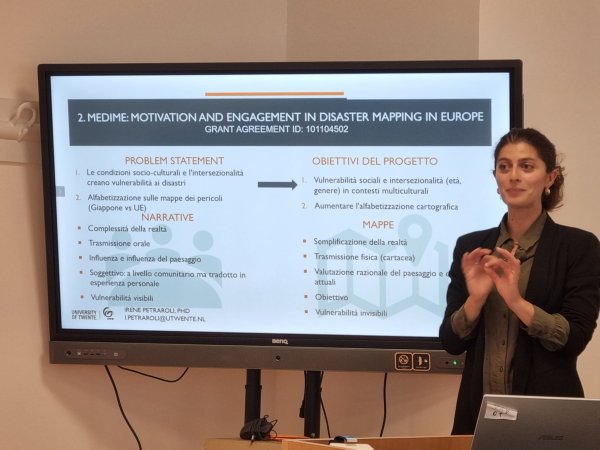
MEDiME activities bring together research, innovation, and collaboration to better understand and enhance engagement in disaster preparedness and hazard mapping literacy. We combine social science insights with digital tools and serious games to explore how people contribute to, learn from, and are motivated by mapping initiatives in preparation for natural hazards and evacuation scenarios.
MEDiME work, then, spans a variety of areas — from research studies and workshops to data analysis, educational outreach, and partnership events. Each activity is designed to strengthen connections between communities, researchers, and decision-makers, fostering a more resilient and informed approach to disaster management across Europe and beyond.
Collaborations
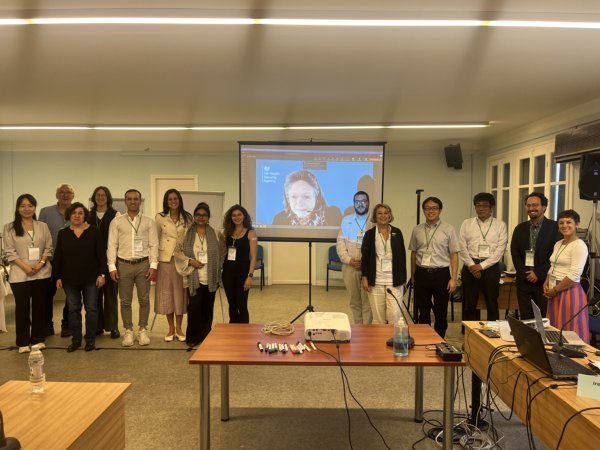
MEDiME thrives on international collaboration. We are proud to work with outstanding institutions and researchers from around the world who share our passion for advancing disaster mapping, motivation, and engagement research.
So far, we are fortunate to have established collaborations with:
- Università degli Studi di Messina, Messina (Italy)
- JST-Mirai project (Japan)
- Kyushu University, Fukuoka (Japan)
- SHOCKTRACKER project, Stockholm (Sweden)
- Tohoku University, Sendai (Japan)
We are always open to new partnerships that can help expand the reach and impact of our work.
If your institution is interested in collaborating with the MEDiME project, please contact our Principal Investigator, Dr Irene Petraroli, at i.petraroli@utwente.nl.
Stay updated!
STAY UPDATED about news and activities related to the MEDiME Project!
This newsletter is part of the HORIZON 2022-funded project MEDiME. This newsletter will be used to update registrants about news and activities related to the project. The newsletter does not have any commercial purpose. Registrants subscribe voluntarily and can withdraw from the subscription at any time. Personal data will be collected, processed and protected according to the General Data Protection Regulation (GDPR) (EU) 2016/679. By subscribing, you acknowledge that the information you provide will be processed under our Privacy Policy.
You can unsubscribe at any time using the button below.
Contact persons