

ON 23 APRIL 2026, THE ROBOTICS CENTRE AT THE UNIVERSITY OF TWENTE WILL HOST ITS ANNUAL ROBOTICS DAY.
Join us for a day of inspiration, where leading researchers from the University of Twente and experts from industry and society share the latest developments in Robotics for Food & Agriculture. Discover cutting-edge demonstrations that showcase what robotics can do today - and what lies ahead.
Meet our vibrant community of researchers, industry partners, societal organizations, and students, and explore new opportunities for collaboration in robotics.
PROGRAMME (IN PROGRESS, SUBJECT TO CHANGE)
09:45 Walk-in and registration
Guests are invited to arrive, check in at the registration desk, and grab a coffee/tea.
10:15 Opening and Welcome
We will officially open the event with a warm welcome from our host and give a short introduction of the day ahead.
10:45 KEYNOTE by ing. Erik Pekkeriet (Wageningen University & Research)
Challenging Agri Food
How do we innovate us out of this
To produce our food more sustainable, fresh, diverse and nutritious, reducing inputs at the same time, more labour/effort is needed. Labour inputs must increase, precisely at the moment when labour availability is under most pressure, both demographically and politically. To overcome this challenge robots are the best solution. But where are the robots. What makes it so difficult and what technical challenges need to be solved to be successful. Erik Pekkeriet will share his thoughts, solutions and research lines.
About Erik Pekkeriet
Erik (born 1970) is Programme Manager Vision & Robotics at Wageningen University & Research. 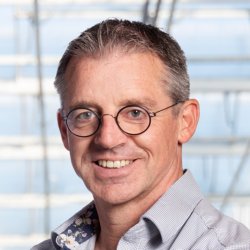 He leads an agile team developing advanced robotic and vision technologies for the agri‑food sector. He studied Mechanical Engineering at NHL‑Stenden University of Applied Sciences and began his career at Philips in maintenance management. He later worked in innovation management for the greenhouse horticulture sector before joining WUR, where he contributed to major projects in robotic harvesting, vision-based sorting, and greenhouse automation. Pekkeriet also coordinates the AgriFood cluster of NXTGEN Hightech, chairs the EU Roboitics Topicgroup Agriculture and serves in several other advisory and leadership roles in agricultural robotics.
11:30 KEYNOTE by Prof. dr. Cyrill Stachniss (University of Bonn)
Robotics and Phenotyping for Sustainable Crop Production
Crop farming is essential in our society, providing food, feed, fiber, and fuel. We heavily rely on crop production, but at the same time, we need to reduce the production footprint. PhenoRob addresses this key challenge by investigating new solutions to produce crops sustainably. We follow novel technology-driven approaches to move toward sustainable crop production. Here, agricultural robots offer promising directions to address management challenges in agricultural fields or support plant breeding efforts through large-scale trait acquisition. For that, field robots need the ability to perceive and model their environment, predict possible future developments, and make appropriate decisions in complex and changing situations. This talk will showcase our recent developments in robotics for crop production, incorporating machine learning to support farmers in operating more sustainably and reducing some negative impacts on the ecosystem.
About Cyrill Stachniss
Cyrill Stachniss is a full professor at the University of Bonn and is with the Lamarr Institute for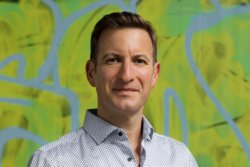 Machine Learning and Artificial Intelligence. He was Visiting Professor in Engineering at the University of Oxford and was with the University of Freiburg and ETH Zurich. He was a Microsoft Research Faculty Fellow and received the IEEE RAS Early Career Award, and was senior editor for the IEEE Robotics and Automation Letters. He is the spokesperson of the DFG Cluster of Excellence "PhenoRob" at the University of Bonn. His research focuses on probabilistic techniques as well as learning approaches for mobile robotics, perception, and navigation. The main application areas of his research are autonomous service robots, agricultural robotics, and self-driving cars. He has co-authored over 350 publications and has coordinated multiple large-scale research projects on the national and European levels. Besides his university involvement, he co-founded three startups: Escarda Technologies, DeepUp, and PhenoInspect.
12:00 Robotics Demo
12:30 Lunch with Poster and Demo market
14:00 Talk by dr. Renske Landeweert (imec)
3D perception for robotic control in complex environments - by OnePlanet / Imec
Real-world environments can be dynamic, with changing weather, lighting, terrain, or obstacles, requiring robots to constantly adapt. In agriculture especially, future robots must handle a wide range of tasks with different levels of complexity, requiring adaptability and sometimes even learning new behaviours on the fly.
In fruit orchards, branch pruning is essential for healthy tree growth and stable fruit yields. However, precision pruning is physically demanding and labour-intensive, with skilled workers becoming increasingly difficult to find. That’s why robots are being considered as pruning assistants in orchard management. Autonomous precision pruning requires a holistic view of the full tree structure and a more detailed view of the branches.
This challenge is overcome by imec’s technology on multi-sensor mapping to create a high-resolution 3D scan of the full tree in a highly efficient manner, while deep learning based on 3D point clouds determines which branches need to be pruned. A robotic arm autonomously controls a cutting tool to remove branches while avoiding obstacles and planning its movements in a highly constrained environment. OnePlanet Research Center envisions that the challenges of robotic actuation in complex environments like agriculture will be overcome by advancements in 3D sensor fusion, AI, robust hardware and improved human-robot interaction strategies.
About Renske Landeweert
Renske Landeweert studied biology at the University of Groningen and obtained her PhD at 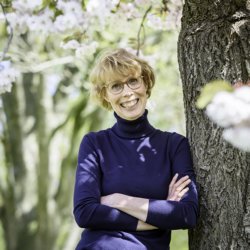 Wageningen University & Research in 2003. She then build a successful diagnostic agri-service laboratory in the private sector, founded a startup in Wageningen, and - on behalf of the Ministry of Agriculture, Nature and Food Quality (LVVN) and the Netherlands Food and Consumer Product Safety Authority (NVWA) - oversaw the national implementation of new EU legislation on plant diseases. Currently, she works as Program Manager Robotics at imec, where she leads the development of innovative research programs in robotics and related technologies.
14:30 Talks
16:00 Closing - Drinks
17:00 End
More events
 Mon 18 - Wed 20 May 2026Twente Health School Event: Ready to shape the future of health?
 Thu 28 May 2026 12:30 - 13:30Water quality monitored with Citizen Science and The making of UT Science Stories
 Wed 10 Jun 2026 12:30 - 17:00ENHANCE - Voices in motion
 Tue 30 Jun 2026 09:00 - 17:15AI Day 2026