

The GEM MSc programme has secured continued Erasmus+ funding for 70 full scholarships across four intakes beginning in September 2026.
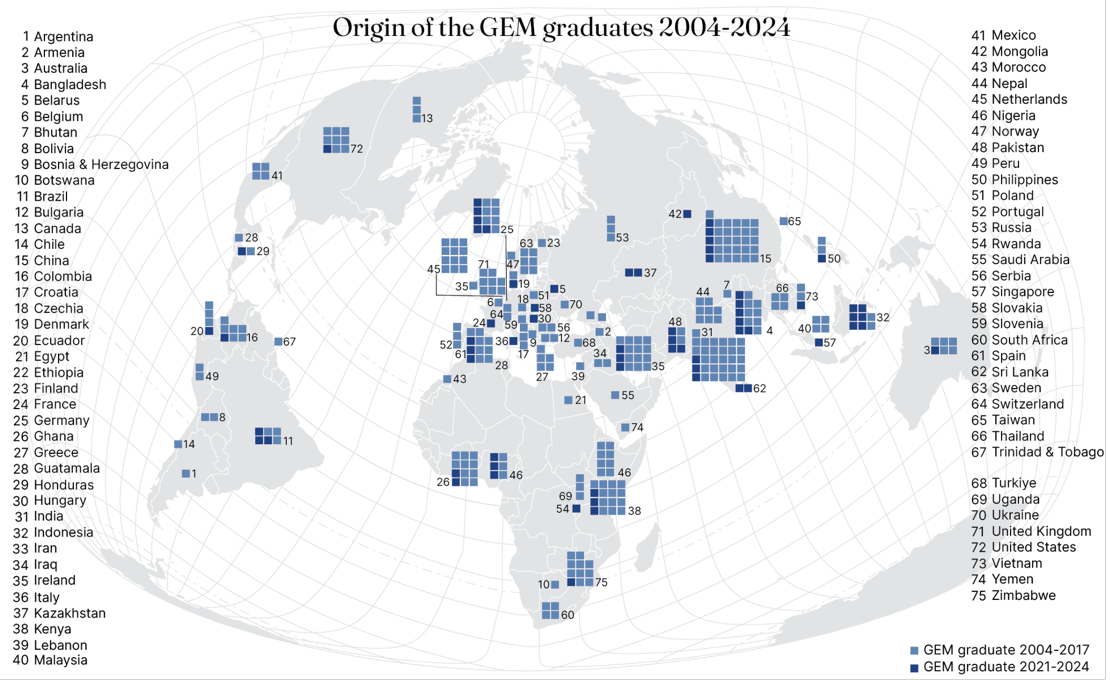
The €4.6m grant represents a significant achievement in the 21st anniversary of the programme, coordinated by the ITC Faculty, which has trained over 340 geospatial environmental management professionals from 75 different countries since 2004. The announcement comes after a competitive selection process. The renewed funding ensures that GEM will continue providing cutting-edge and inclusive education.

Two decades of excellence
The GEM MSc (Geo-information Science and Earth Observation for Environmental Modelling and Management) launched in 2004 as one of the first geoinformation-focused programmes within the Erasmus Mundus Joint Master Degree framework. The programme was born in the same year when the European Commission launched Erasmus Mundus in 2004 as a cooperation programme for academic excellence, positioning itself as a pioneer in international joint degree education.
GEM’s international consortium has evolved over its 20+ years and is now formed of four institutions: ITC University of Twente (Netherlands) as coordinator, specialising in natural resources management, Lund University (Sweden) focusing on ecosystem science, University of Tartu (Estonia) emphasising socio-ecological systems, and UCLouvain (Belgium) concentrating on agricultural applications.



A large number of Associate Partners from around the world complement the core partners who offer the GEM curriculum. The Associate Partner network provides internships, help students build professional networks, and exposure to real world challenges in industry, research, and policy in environmental management.
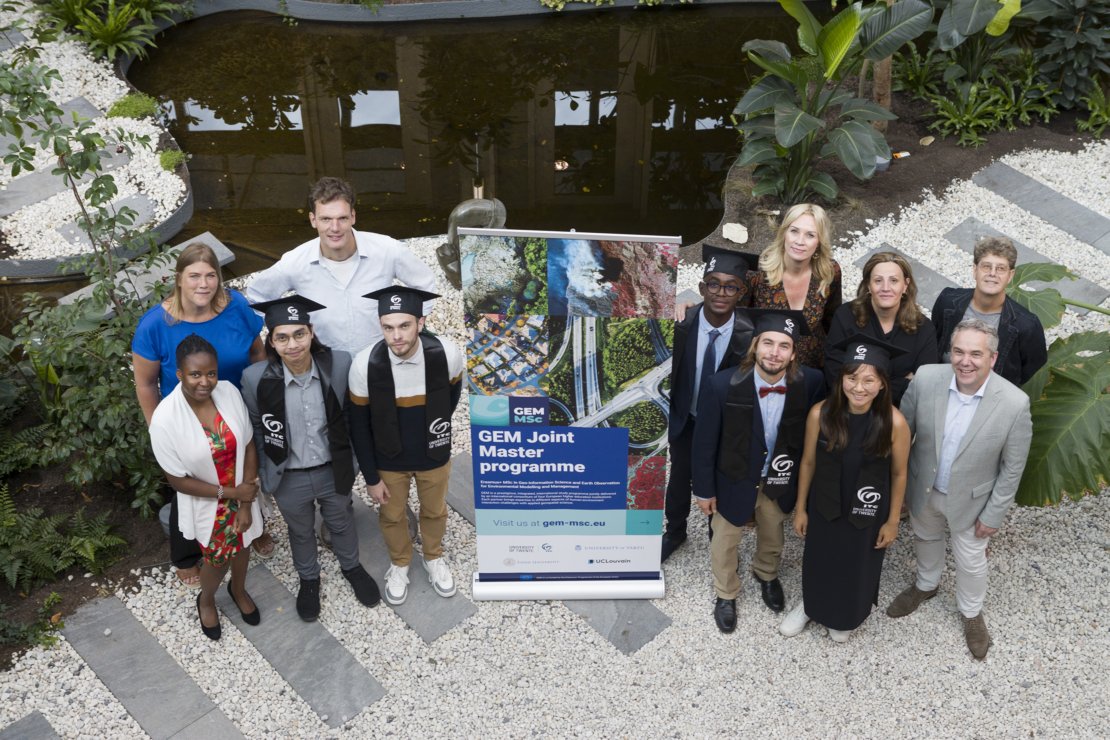
Some of the GEM graduates in 2024
Four tracks, two degrees, global impact
GEM's new structure give students the opportunity to complete studies at two different universities across consecutive years, earning double degrees while specialising in one of four tracks. Track 1 (Geospatial Planner) and Track 2 (Geospatial Analyst) begin at the University of Tartu, while Track 3 (Geospatial Developer) and Track 4 (Geospatial Modeller) start at Lund University. Students then complete their second year at either ITC Twente or UCLouvain, depending on their chosen track.
These newly designed tracks, and the competencies that students develop while studying, align with high demand in the job market for digital and green skills in the applied geospatial domain. Employment rates from GEM are over 95%, with graduates quickly finding positions in private companies, academia, government, NGOs, and some even starting their own companies. Around 50% of GEM graduates pursue PhD programmes, mainly in Europe and the US.
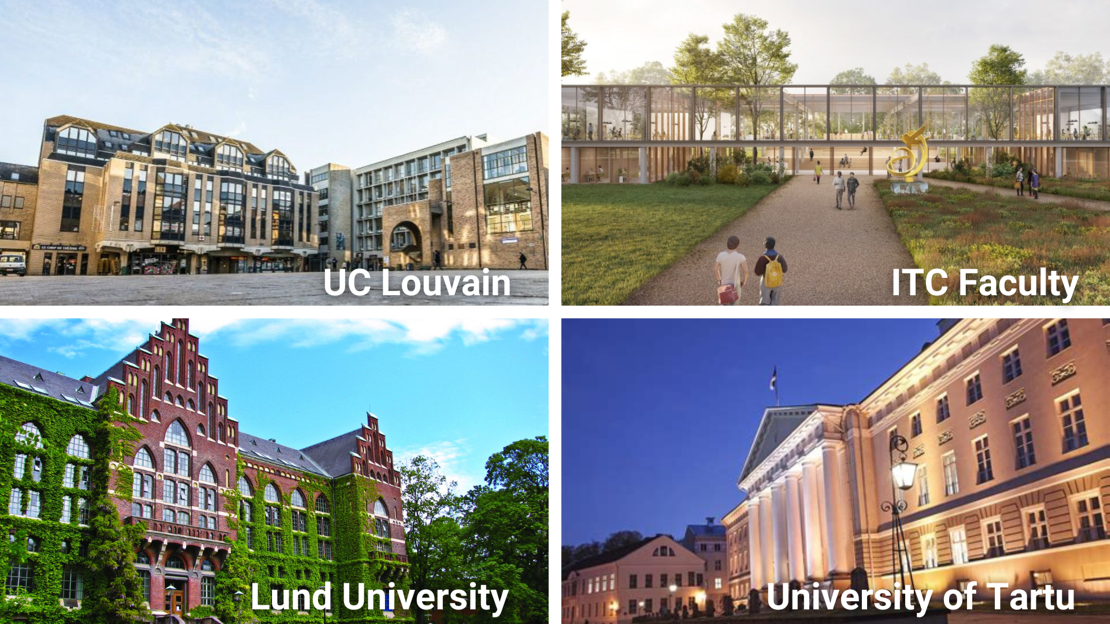
GEM – an international consortium
More information about GEM
Interested in GEM? Details on scholarships, application procedures, a downloadable brochure, and the new Study Guide are published on the GEM website (www.gem-msc.eu).
 GEM is co-funded by the Erasmus+ Programme of the European Union
More recent news
 Fri 10 Oct 2025ECO-MOSAIC: A new ESA-funded project to monitor biodiversity under Climate Change
 Tue 22 Jul 2025In Memoriam: Dr. Abel Chemura
 Mon 30 Jun 2025GEM Joint Event 2025
 Fri 6 Jun 2025PhD candidate Novia Arinda Pradisty receives KNAW grant to research mangrove ecosystems
 Mon 26 May 2025Comparing the climate impact of two farming styles for Herenboeren Usseler Es